

Origins of the Red Dress Day
Why Red Dresses?
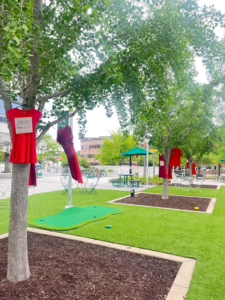
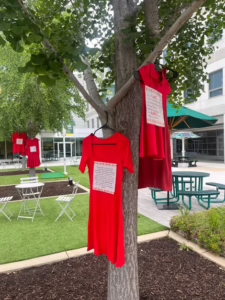
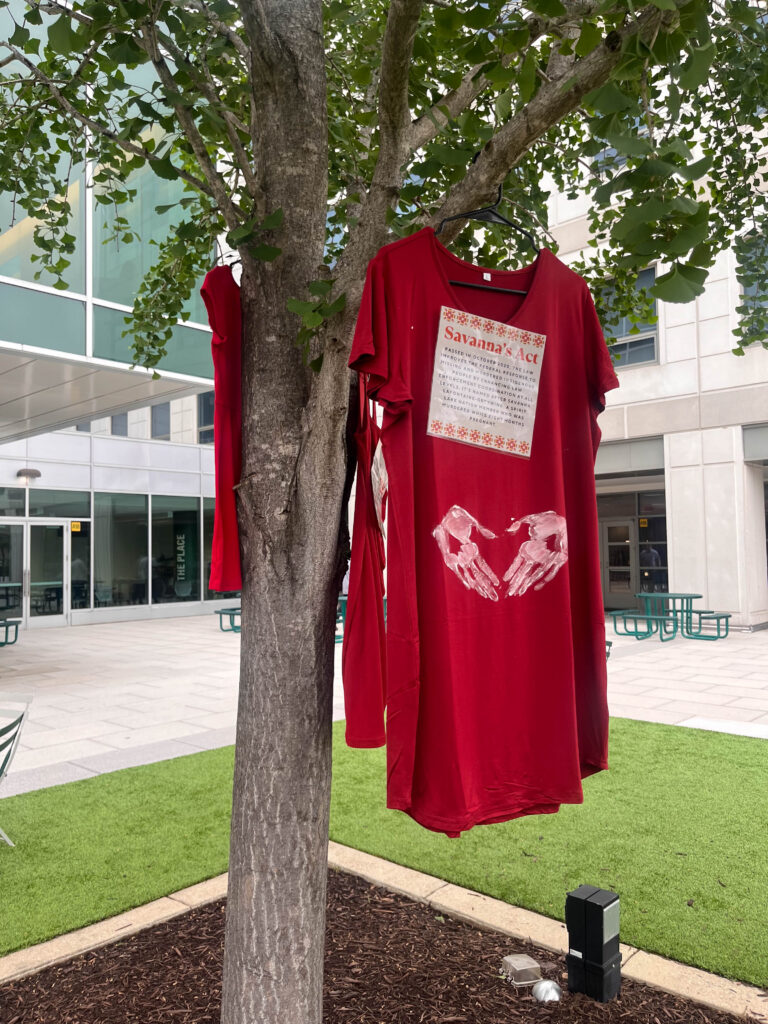
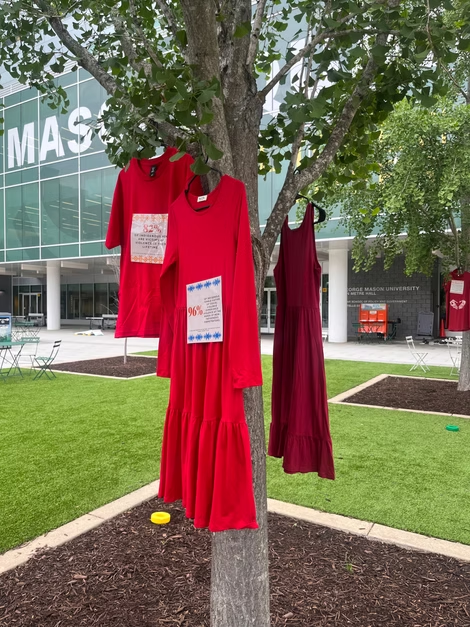
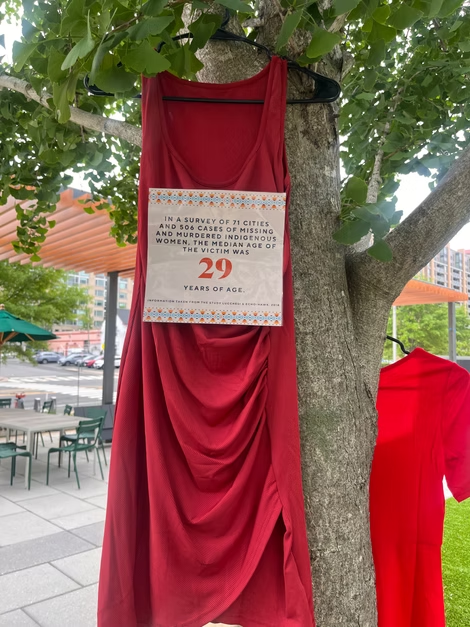
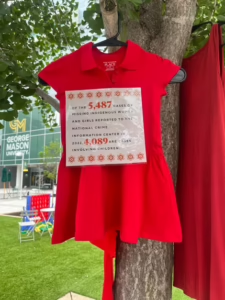
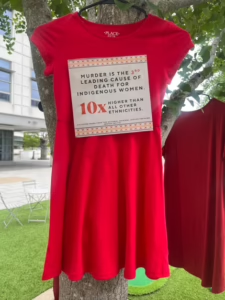
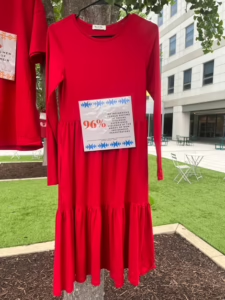
These empty red dresses symbolize missing and murdered indigenous women and girls. The choice of the color red is rooted in indigenous beliefs that the dead can see the color red. The color red calls spirits back to their loved ones and invokes the help of their ancestors in finding peace.
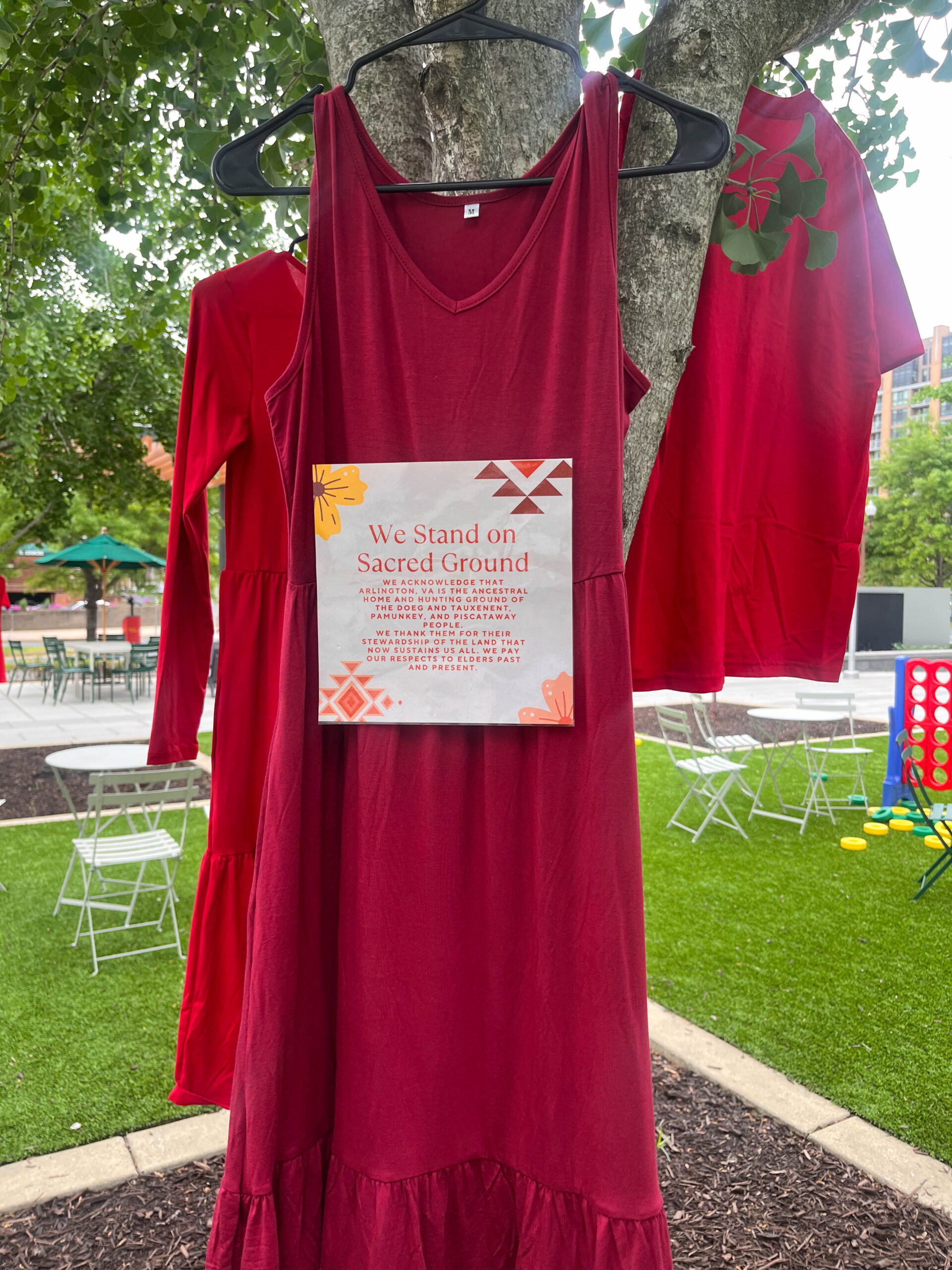
We Stand on Sacred Ground
We acknowledge that the land the George Mason campuses reside on are the past, present, and future home of the Rappahannock, Pamunkey, Upper Mattaponi, Chickahominy, Eastern Chickahominy, Nansemond, Monacan, Mattaponi, Patawomeck, Nottaway, and Piscataway tribes. We thank them for their stewardship of the land that now sustains us all. We pay our respects to elders past and present.
Hanna Harris’ Story
Hanna Harris was born on May 5, 1992, a citizen of the Northern Cheyenne Tribe. On July 5, 2013, Hanna’s family reported her missing in Lame Deer, Montana, and her body was found five days later. Hannah was raped and murdered.
In honor of Hanna Harris and the thousands of other missing and murdered Native American women and girls, the U.S. Senate designated May 5 as “National Day of Awareness for Missing and Murdered Native Women and Girls.” President Joe Biden also signed a proclamation for May 5, declaring it “Missing and Murdered Indigenous Persons Awareness Day.”
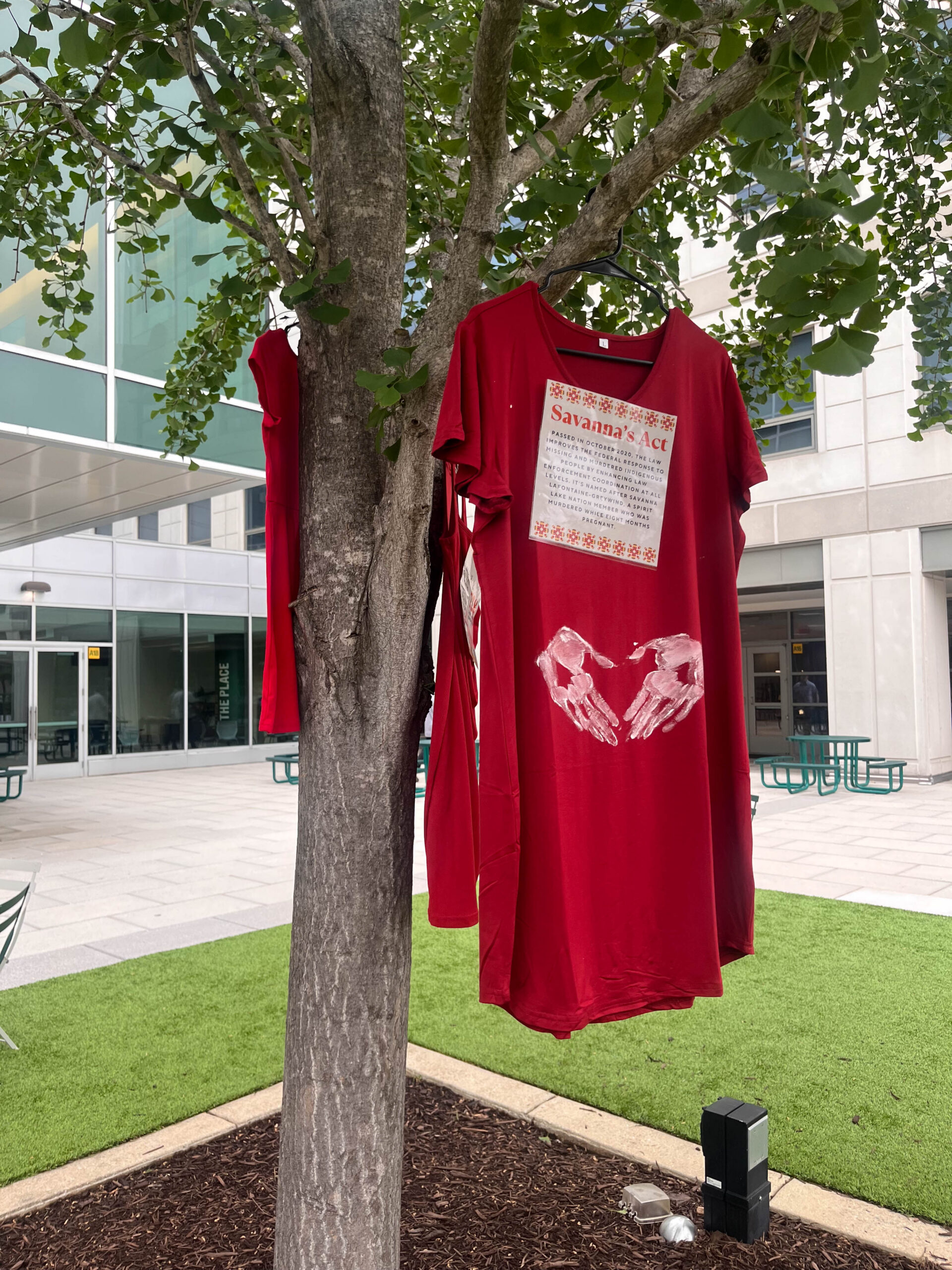
Savanna’s Act
Passed in October 2020, the law improves the federal response to missing and murdered Indigenous people by enhancing law enforcement coordination at all levels. It’s named after Savanna LaFontaine-Greywind, a Spirit Lake Nation member who was murdered when her baby was cut from her womb.
Her daughter, Haisley Jo, survived the forced delivery.
728 Cases
Florida is the state with the most reported cases of missing indigenous women - 728 as of March 2024.
Number taken from National Missing and Unidentified Persons System (NAMUS).
Higher Murder Rates
Murder is the 3rd leading cause of death for Indigenous women - 10 times higher than all other ethnicities.
Statistics Taken from The National Criminal Justice Training Center (NCJTC).
4,089 Cases Involving Children
Of the 5,487 cases of missing indigenous women and girls reported to the National Crime information center in 2022, 4,089 are cases involving children.
Statistics Taken from The National Criminal Justice Training Center (NCJTC).
29 Years Old
In a survey of 71 cities and 506 cases of missing and murdered Indigenous women, the median age of the victim was 29 years of age.
Information taken from the study Lucchesi & Echo-Hawk, 2018.
Sex Trafficking Victims
40% of sex trafficking victims in the United States are American Indian and Alaska Native women.
Statistics Taken from The National Criminal Justice Training Center (NCJTC).
Non-Indigenous Perpetrators
96% of Indigenous female victims of sexual violence experience violence at the hands of non-indigenous perpetrators.
Information taken from a National institute of Justice Report (Rosay, 2018).
Male Indigenous Victims
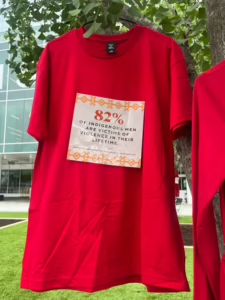
82% of Indigenous men are victims of violence in their lifetime.
Statistics taken from the Urban Indian Health Institute.
The bill also mandates the creation of an advisory committee on violent crime within Indian lands and against American Indians and Alaska Natives.
Introduced as an amendment to the Violence Against Women Act (VAWA) in 2005, this title provides clarity for the implementation of the VAWA through three purpose areas:
1. to decrease the incidence of violent crimes against Indian women;
2. to strengthen the capacity of Indian tribes to exercise their sovereign authority to respond to violent crimes committed against Indian women
3. to ensure that perpetrators of violent crimes committed against Indian women are held accountable for their criminal behavior.
If you need support, please contact;
-
Student Support and Advocacy Center:
-
Website: https://ssac.gmu.edu
-
Phone number: 703-993-3686
-
Email: [email protected]
-
-
StrongHearts Native Helpline
-
Website: https://strongheartshelpline.org/
-
24/7 Hotline: 1-844-7NATIVE (762-8483)
-